
Founder Laura Hattersley speaks at the University of Cambridge about the mental health toll of CASK disorders
Saturday, 13 June 2026

We were honoured to be invited to speak at the Genomics and Mental Health Research Day at the University of Cambridge, Newnham College, alongside leading clinicians, researchers, and experts in the field.
This inspiring one-day conference brought together practitioners, researchers, and lived-experience representatives to explore current and future directions in post-diagnostic mental health research within rare genetic communities.
It was a day filled with hope, hearing from so many people who are passionate about improving the mental health and wellbeing of those affected by rare neurological disorders. Importantly, the discussions recognised not only the needs of individuals living with these conditions, but also the significant impact on parents, carers, and families.
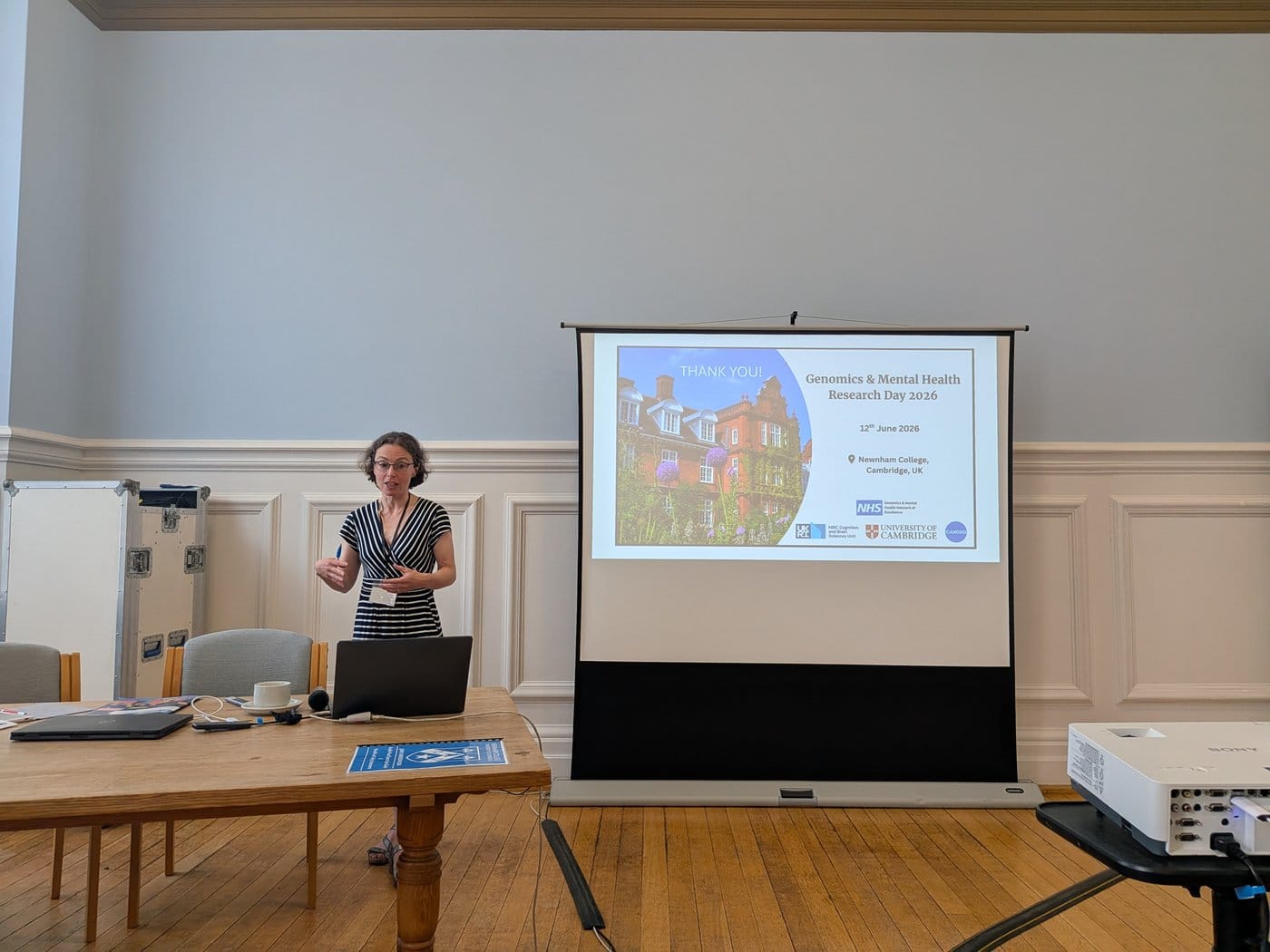
Two of the presentations featured studies that members of the CASK community had contributed to. It was incredibly encouraging to see how the involvement of our families is helping to advance understanding of the mental health impact of rare diseases more broadly.
As always, we are deeply grateful to every family who has taken part in research studies. Without your participation, these insights would not be possible, and our collective voice would be far less powerful. You are helping to drive change, improve understanding, and shape a better future for rare disease families.
Get CASK news in your inbox
Monthly research breakthroughs, family stories and ways to help — straight to your inbox.